
Despite the recommended 14-day turnaround time for genomic testing, patients in some regions are facing delays of several weeks. This is wholly unacceptable and causes significant physical and mental harm to patients who, after receiving a devastating diagnosis, must endure prolonged waits before starting the most suitable treatment.
We owe it to our patients to ensure they receive the most appropriate and effective treatment as swiftly as possible. No one diagnosed with lung cancer should wait more than 14 days for their genomic test results
Speeding up turnaround times to 14-day target will prolong lives says report
Thousands of lung cancer patients could be missing out on life-extending, targeted treatments, due to lengthy genomic testing turnaround times, says a new report by the UK Lung Cancer (UKLCC) published today (4 March 2025).1
Genomic testing is a critical part of the lung cancer diagnostic and treatment pathway. It helps to define the molecular make-up of tumours, enabling lung cancer patients to access an increasing range of innovative and personalised treatments targeting their specific lung cancer type. This, in turn, can increase their chance of survival.2
As many as 30,000 UK lung cancer patients a year have tissue sent for genomic testing.1 Yet, despite a recommended maximum 14-calendar day testing turnaround time (from tissue biopsy to full genomic test results report)3 – in some parts of the country, patients are experiencing delays running into weeks.
“This is wholly unacceptable, causing significant physical and mental harm to patients, who, having already received their devastating diagnosis, then have to endure prolonged waits before starting the treatment best suited to them,” says Robert Rintoul, Professor of Thoracic Oncology, University of Cambridge; Honorary Consultant Respiratory Physician, Royal Papworth Hospital, and the UKLCC’s Clinical Lead. “Lung cancer is a rapidly fatal disease so speedy access to test results and the most effective treatments is vital.”
According to the recent Darzi review, less than two-thirds (60%) of genomic tests are delivered on time in England.4
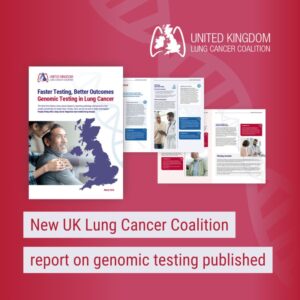
Called ‘Faster Testing, Better Outcomes: Genomic Testing in Lung Cancer’, the new report calls for faster turnaround times and highlights the current challenges and delays within the complex genomics pathway. Issues include lack of published turnaround time data across genomic laboratory hubs (GLHs); inconsistent tissue sample quality; non-uniform results reporting; inadequate IT systems, staffing shortages in laboratories; and inefficient sample transportation (with some tissue samples being sent to labs for analysis by second-class post).
The report offers practical solutions for timely, accurate, and high-quality genomic test results, across the UK, and provides examples of where processes are working well. Recommendations include:
- Regular collection and national publication of genomic testing turnaround times by the four UK health administrations.
- A named individual responsible for overseeing the entire testing pathway.
- Genomic labs to operate a seven-day working model and provision of greater training places for healthcare scientists.
- A single digital tracking system for patient samples to monitor their journey.
- Standardised reporting templates for genomics to improve report clarity and understanding.
- A single online platform for rapid submission and receipt of results.
- Patients and families must have access to appropriate information regarding pathology and genomic testing.
“Faster genomic testing can streamline the patient’s journey, avoid less-effective treatments and ultimately save costs for the NHS”, added Professor Rintoul.
Lung cancer is the UK’s biggest cancer killer with nearly 35,000 people dying each year.5 It accounts for more than a fifth of all UK cancer deaths (21%) – and lung cancer in never smokers is the eighth most common cause of cancer-related death in the UK.5,6 Five-year UK lung cancer survival rates compare poorly with comparable European countries (16.2%) – and over one-third (35%) of people with lung cancer are diagnosed by emergency admission to hospital in England.7,8 However, it can be cured if diagnosed early enough.
“No one diagnosed with lung cancer should wait more than 14 days for genomic test results,” says Dr David Gilligan, Consultant Clinical Oncologist at Cambridge University Hospitals and Royal Papworth Hospitals and Chair of the UKLCC: “We owe it to our patients to ensure that they receive the most appropriate and effective treatment as swiftly as possible.”
A copy of the full report can be accessed at: www.uklcc.org.uk/our-reports